Maths Refreshed Curriculum
In the mathematics and statistics learning area, students learn about and appreciate the power of symbolic representation, reasoning, and abstraction. They learn to investigate, interpret, and explain patterns and relationships in quantity, space, time, data, and uncertainty. As they achieve deep conceptual understanding and procedural fluency in the learning area, students can accurately and efficiently use mathematics and statistics as a foundation for new learning and to solve problems.
Students engage with mathematics and statistics through the exploration of problems, patterns, and trends and appreciate the everyday value of this learning in many areas of their lives, such as personal finance, health, dance, and design. Every student in New Zealand can engage in mathematics and statistics and discover personal enjoyment and curiosity in their learning.
Throughout their learning, students engage with diverse perspectives as they apply their mathematical and statistical understandings. They also learn that mathematics and statistics has an evolving history; many cultures have contributed to, and continue to contribute to, innovations that shape our current thinking.
As they move through the phases of the learning area, students come to understand the value of mathematical and statistical investigation as a lens for collective local, national, and global challenges. Mathematics and statistics allow us to engage with important societal matters, such as the robust and ethical gathering, interpretation, and communication of data, and the use of valid and reliable data to challenge misinformation and disinformation.
Learning in mathematics and statistics builds literacy by developing students’ skills in oral and written communication, reasoning, and comprehension. The learning area opens pathways into a wide range of industries that rely on mathematical and statistical knowledge and reasoning. Learning how to use this knowledge purposefully and flexibly allows students to participate fully in an increasingly technology- and information-rich world of work.
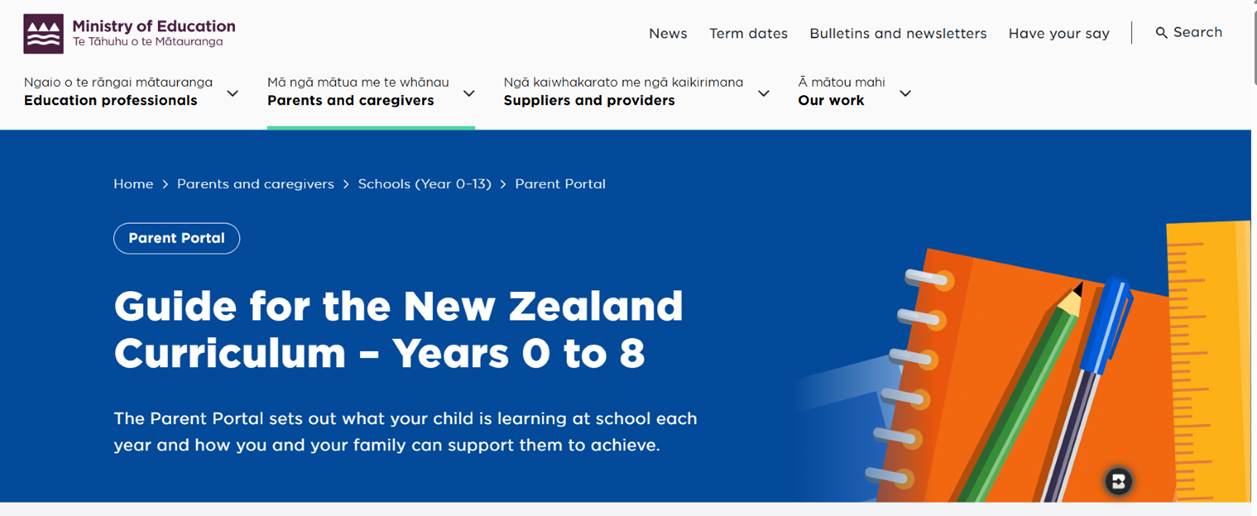
The learning sequence that is in the New Zealand Curriculum is outlined in more detail for parents in the Parent Portal. If you select the correct year group for your child, an outline of the maths curriculum is shared. A link is provided on the picture below:
Teaching and Learning at Willow Park
Willow Park School has introduced a structured approach to Maths. This approach has now been mandated by the Ministry of Education for all schools since the beginning of 2025. All teachers at Willow Park School are currently involved in ongoing professional development to implement the refreshed curriculum, using a Ministry approved resource called Maths No Problem. This resource has workbooks, teacher manuals and an online teaching platform provided free by the Ministry. The reason that Willow Park chose this resource was due to the close alignment with our current practice in maths.
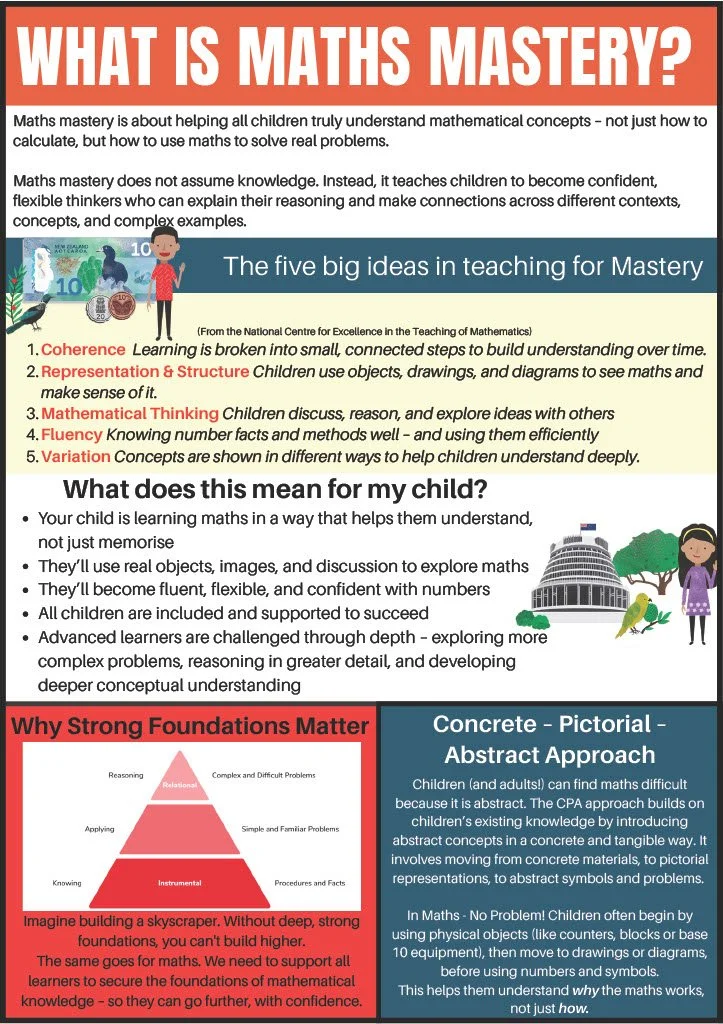
Maths No Problem uses a teaching approach of concrete to pictorial to abstract (CPA). This allows the development of new skills and knowledge through the use of manipulatives, or concrete materials; then a move to imaging or picture representations of contexts, and then on to an abstract approach of sums on the page which many of you will be familiar with from your own schooling. The emphasis on problem solving and critical thinking skills remains a key focus, as these are essential for maths learning and assessment as children move into intermediate and high school.
More information about Maths No Problem can be found in the graphic below: